
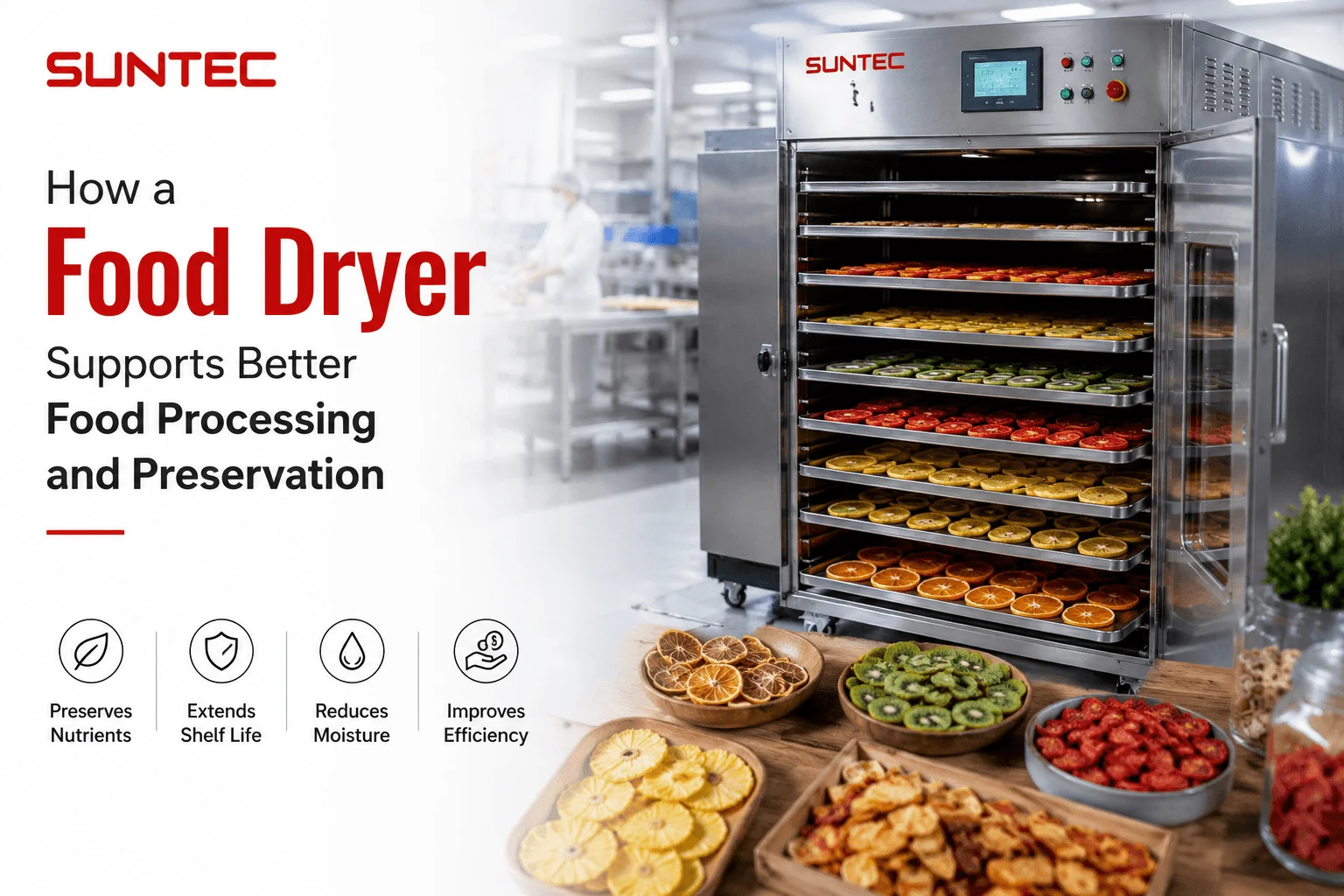
Food preservation has always been an essential part of the food processing industry. As consumer demand for high-quality dried products continues to grow, manufacturers are adopting advanced technologies that improve efficiency while maintaining product quality. Controlled drying helps reduce moisture content, extend shelf life, and preserve the natural characteristics of fruits, vegetables, herbs, and other food items. Modern drying systems also support better production consistency and reduced waste. Investing in a food dryer allows processing facilities to achieve reliable drying results while maintaining hygiene and improving operational efficiency.
Why Efficient Drying Is Essential in Food Processing
Drying is one of the most effective methods for preserving food without compromising its usability. Removing excess moisture helps slow microbial growth and reduces the risk of spoilage, making products easier to store and transport.
Key benefits of efficient food drying include:
- Longer product shelf life
- Reduced food wastage
- Improved storage efficiency
- Better product consistency
- Easier transportation due to lower moisture content
- Enhanced production planning
An efficient drying process supports manufacturers in delivering products with consistent quality while optimizing production workflows.
Selecting the Right air dryer for food
Different food products require different drying conditions. Choosing the appropriate equipment depends on production capacity, product type, moisture levels, and operational requirements.
| Selection Criteria | Why It Is Important |
| Drying Capacity | Matches production volume |
| Temperature Control | Protects product quality |
| Airflow Distribution | Ensures even drying |
| Energy Efficiency | Helps reduce operating costs |
| Maintenance Accessibility | Simplifies regular servicing |
Carefully evaluating these factors helps businesses choose equipment that delivers dependable performance while supporting long-term productivity.
Factors That Influence Drying Performance
Successful food drying depends on maintaining proper process conditions throughout production. Temperature, airflow, humidity, and drying duration all influence the final quality of the product.
Modern drying systems are designed to provide controlled environments that allow moisture to be removed gradually while preserving texture, colour, and overall appearance. Proper monitoring also reduces the likelihood of uneven drying, which can affect product consistency.
Routine maintenance is equally important. Cleaning equipment regularly, inspecting airflow systems, and checking operational settings help maintain efficient performance while minimizing unexpected downtime.
Applications of a Veg Dryer in the Food Industry
Vegetable drying plays an important role in food processing by supporting longer storage periods and reducing post-harvest losses. Modern drying equipment is used across various production environments where consistent moisture removal is required.
Common applications include:
- Leafy vegetable processing
- Root vegetable drying
- Herb preservation
- Spice preparation
- Ready-to-cook food production
- Dehydrated ingredient manufacturing
These applications require controlled drying conditions that help preserve the usability and quality of processed ingredients. Reliable equipment supports manufacturers in maintaining consistent production standards while improving operational efficiency.
Best Practices for Effective Food Drying Operations
Achieving consistent drying results requires careful planning and routine operational management. Following established practices helps improve equipment performance and product quality over time.
Recommended practices include:
- Sorting raw materials before processing
- Maintaining consistent drying temperatures
- Monitoring airflow throughout the drying cycle
- Performing scheduled equipment maintenance
- Inspecting products regularly during processing
These measures help reduce quality variations while improving production efficiency. Businesses that maintain organized operating procedures often experience better equipment reliability and smoother manufacturing processes.
Frequently Asked Questions
1. Why is food drying important?
Food drying reduces moisture content, extends shelf life, minimizes spoilage, and improves storage and transportation efficiency.
2. What factors affect drying quality?
Temperature, airflow, humidity, drying duration, and proper equipment maintenance all influence drying performance.
3. Which products can be processed using food dryers?
Food dryers are commonly used for vegetables, fruits, herbs, spices, and other agricultural products that require moisture reduction.
4. How often should drying equipment be maintained?
Routine inspections and scheduled maintenance help maintain consistent performance while reducing the risk of equipment failure.
5. How can businesses improve drying efficiency?
Proper equipment selection, regular cleaning, monitoring process conditions, and preventive maintenance all contribute to improved operational efficiency.
Conclusion
Efficient drying systems play a valuable role in modern food processing by supporting product quality, reducing waste, and improving production consistency. Selecting equipment that matches specific operational requirements helps businesses achieve reliable long-term performance while optimizing manufacturing processes. Organizations searching for a dependable dryer machine for food should prioritize solutions that combine effective moisture control with operational efficiency. Companies such as SunTecenergy contribute to advancing food processing technologies by supporting reliable drying solutions designed to meet the evolving needs of the industry.

No comment