Thermal energy sits at the core of many industrial processes, influencing efficiency, safety, and product quality. From heat treatment and drying to melting and curing, the equipment responsible for controlled combustion directly affects operational reliability. In facilities across the country, discussions around Gas Burners in India often centre on performance consistency, adaptability to process demands, and long-term operational stability rather than output alone.
Understanding Industrial Heat Requirements
Every industrial application has distinct thermal characteristics. Some processes require rapid heat generation, while others depend on steady, uniform temperature over extended periods. Selecting the correct combustion system begins with understanding these requirements in detail.
Key considerations include operating temperature range, fuel compatibility, airflow dynamics, and response time. When these elements are aligned correctly, thermal systems operate with greater predictability and reduced downtime.
The Relationship Between Heat Control and Product Quality
Precise heat control is essential for maintaining product integrity. Fluctuations in temperature can lead to inconsistent material properties, structural defects, or compromised finishes.
Well-designed combustion systems allow operators to regulate flame characteristics accurately, ensuring uniform heat distribution. This control supports repeatable outcomes across production cycles.
Fuel Efficiency and Operational Cost
Energy consumption remains a significant operational expense. Systems that optimise fuel use without sacrificing performance contribute directly to cost control.
Efficient combustion minimises waste, improves heat transfer, and reduces unnecessary emissions. Over time, these efficiencies translate into measurable savings and more sustainable operations.
Safety as a Fundamental Design Element
Industrial thermal systems operate under demanding conditions, making safety a primary concern. Design features such as flame monitoring, pressure regulation, and controlled ignition sequences reduce operational risk.
Compliance with safety standards ensures that systems perform reliably under both normal and variable conditions. Preventive safeguards protect personnel, infrastructure, and production continuity.
Adaptability Across Industrial Applications
Versatility is valuable in dynamic production environments. Facilities that handle multiple products or variable batch sizes benefit from systems capable of adjusting output without complex reconfiguration.
Adaptable designs allow integration across furnaces, ovens, dryers, and boilers, supporting flexible production planning.
Role of Air–Fuel Mixing in Performance
Efficient combustion depends on precise air–fuel balance. Poor mixing can lead to incomplete combustion, energy loss, or unstable flame behaviour.
Advanced designs focus on optimised mixing to enhance thermal efficiency while maintaining stable operation. This balance supports consistent performance under varying load conditions.
Environmental Considerations and Emissions Control
Environmental compliance increasingly influences equipment selection. Reduced emissions and cleaner combustion support regulatory adherence and corporate responsibility goals.
Modern systems incorporate features that lower particulate output and improve overall combustion cleanliness, aligning performance with environmental expectations.
Importance of Application-Specific Selection
No single solution fits every operation. Selection must reflect the specific process, operating environment, and production objectives.
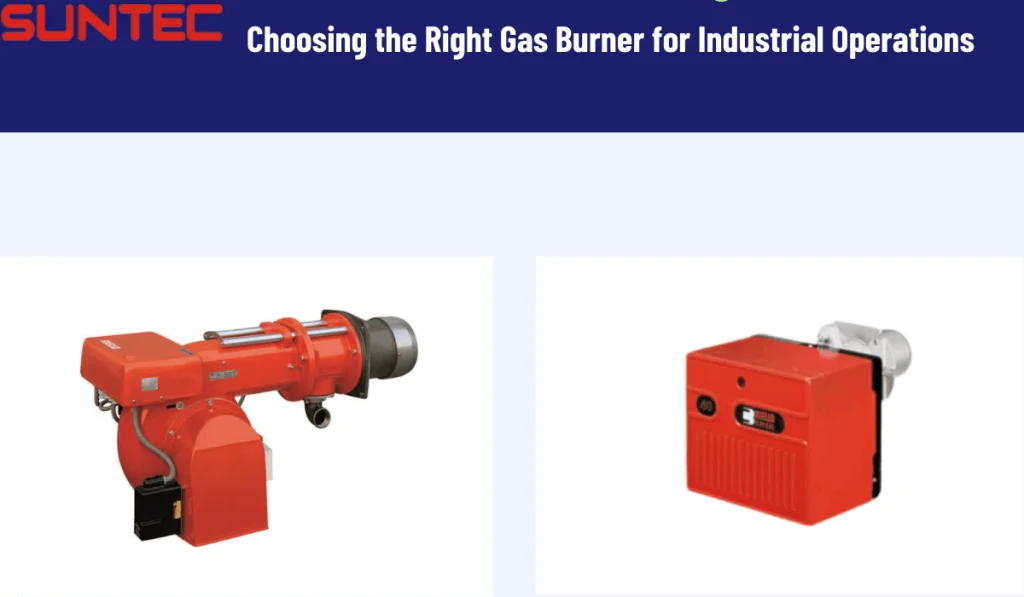
Understanding the types of burner configurations available helps decision-makers match design characteristics with functional needs, ensuring optimal performance rather than compromise.
Integration With Automation and Control Systems
Industrial operations increasingly rely on automation. Thermal systems that integrate seamlessly with control platforms enable precise monitoring and adjustment.
Real-time data supports predictive maintenance, process optimisation, and consistent output, reducing reliance on manual intervention.
Durability and Long-Term Reliability
Industrial environments expose equipment to heat, vibration, and continuous operation. Robust construction and quality materials ensure longevity under these conditions.
Reliable systems reduce maintenance frequency and extend service life, supporting uninterrupted production schedules.
Maintenance Accessibility and Downtime Reduction
Ease of maintenance directly affects operational efficiency. Designs that allow quick inspection and servicing minimise downtime and labour costs.
Accessible components and modular assemblies simplify routine upkeep without extensive disassembly.
Matching Capacity to Operational Demand
Oversized or undersized systems can both undermine efficiency. Correct capacity selection ensures stable operation without excessive cycling or strain.
Accurate load assessment during selection prevents energy waste and supports consistent thermal performance.
Training and Operational Familiarity
Even advanced systems require informed operation. Clear documentation and intuitive controls support safe and effective use.
Operator familiarity reduces error and enhances responsiveness during process adjustments or unexpected conditions.
Industry-Specific Design Considerations
Different industries place unique demands on thermal systems. Metallurgical processes, food production, chemical processing, and ceramics manufacturing each require tailored solutions.
Understanding these sector-specific needs ensures that equipment selection aligns with regulatory, safety, and quality expectations.
Evaluating Performance Over Initial Cost
Initial investment is only one aspect of value. Long-term efficiency, reliability, and maintenance requirements often have a greater impact on total ownership cost.
Evaluating performance across the system’s lifecycle supports informed decision-making and sustainable operation.
Innovation Driving Thermal Efficiency
Ongoing innovation continues to improve combustion efficiency and control. Enhanced materials, refined mixing techniques, and smarter control systems contribute to incremental gains.
These advancements support higher productivity without increasing operational complexity.
Supporting Consistent Output in Demanding Conditions
Industrial environments rarely remain static. Systems must perform reliably despite fluctuations in workload, ambient conditions, or fuel quality.
Well-engineered solutions maintain stability under these variations, protecting both process integrity and equipment lifespan.
Conclusion
Selecting the right combustion solution is a strategic decision that influences efficiency, safety, and product quality across industrial operations. By aligning thermal requirements with system design, organisations can achieve stable performance and long-term operational value. Within this context, industrial gas burners continue to play a critical role in modern production environments. Choosing a reliable Gas Burner solution, supported by engineering insight and application understanding, is essential an approach reflected in the technical expertise associated with Suntec Energy System.